Introducing the Solid Foods at the Right Times
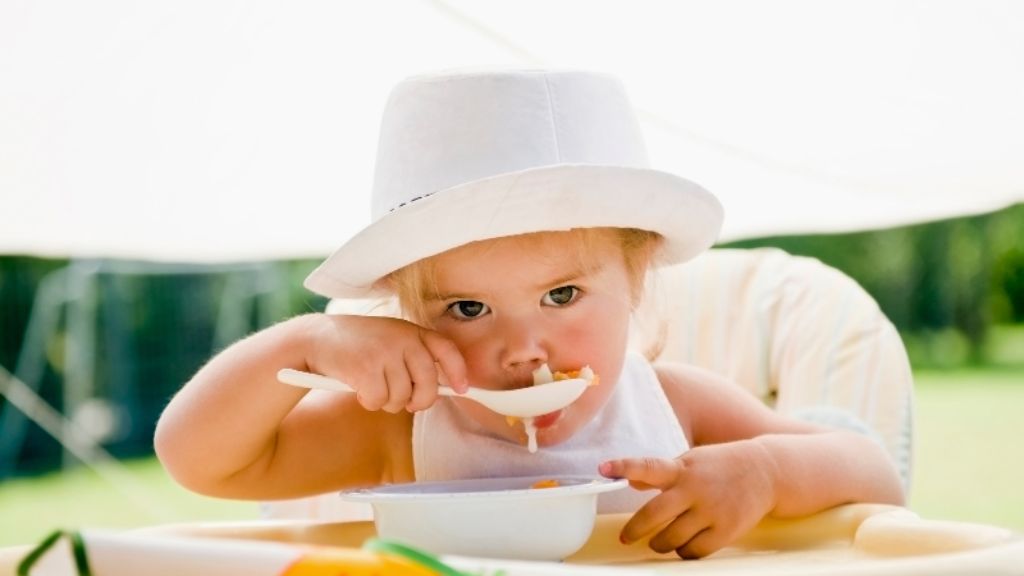

One of the most critical questions parents have is when to give various kinds of solid foods to children. In this regard, language and speech, Integrated Children’s Therapy has a straightforward approach. When the children reach new gross motor milestones such as walking, sitting up, or crawling, that’s a cue to present new kinds of food. The children’s oral motor skills, such as biting, chewing, and swallowing, grow alongside his gross motor skills. When they are ready to do something new with their body, they are also prepared to do something new with their mouth.
Highlights:
Parents can use gross motor milestones to present various solid foods because the oral motor skills to handle multiple food textures grow alongside gross motor skills.
- Sitting up: Jaw stability and tongue movement for eating purees.
- Crawling: Babies and soft foods.
- Walking: Babies and various textures.
Importance of solid foods at the correct times
Too early or too late to introduce solid foods can lead to food aversion, obesity, and different health problems. By presenting foods at the correct times, parents can avoid those issues.
Sitting Up: Purees on a Spoon
- Feeding
If the baby has no medical issue such as reflux, parents stick with the formula, breast milk, or a combination of the two until they can sit with little to no support and hold their head up. This commonly happens around six months of age.
- Speech
The mouth movements and body that develop with eating and sitting purees train your baby to babble.
- Extra Tip
Parents need to make their own pureed food to develop oral motor skills and enable the babies to eat new foods. In addition, it will give the food different tastes, as store-bought purees tend to be very finely pureed and have a similar tasting. As an alternative, try mixing an avocado or banana with store-bought purees.
Crawling: Soft Foods to Chew
- Feeding
When children start crawling, they are prepared for soft foods such as soft fruits, pasta or cooked vegetables. Besides, when parents give their babies these foods on a plate, they encourage them to eat with their fingers. This fine motor skill can be critical in the future for skills such as holding pencils, crayons, and utensils.
- Speech
Chewing and biting help babies use more complex speech and words.
- Extra Tip
Imagine if somebody was repeatedly wiping your hands and face with a damp cloth during a meal. Children learn via curiosity, so parents need to let them smush the food between their fingers and rub it on their faces. This gives them the message that eating is an enjoyable experience and enables them to test different foods.
Walking: Variety of Foods
- Feeding
When children begin to walk around, it gives them more control to chew and bite. In addition, children can now start to eat a variety of textures, such as cubed fruits, cheese, and vegetables.
- Speech
The more complex speech will emerge when children’s tongues, lips, and jaws are coordinated enough for complicated chewing and biting, such as their first true words and jargon.
- Extra Tip
Let your children feed themselves. At this step, they may become curious about using a utensil. However, they need to control both the amount of food they eat and how fast they eat it. Parents also need to encourage their children to have creative eating at this step.
In recent years, Kidscool has been working on children’s feeding development by strengthening the children’s fine motor skills and using games and creative arts.